PARENT GUIDE
My Toddler Will Not Sit for a Book: What Counts as Reading?
7 min read · Published Aug 27, 2026 · Updated Aug 23, 2026A practical, shame-free guide for families navigating constant movement during books, with a story-led routine designed for children ages 1–3.
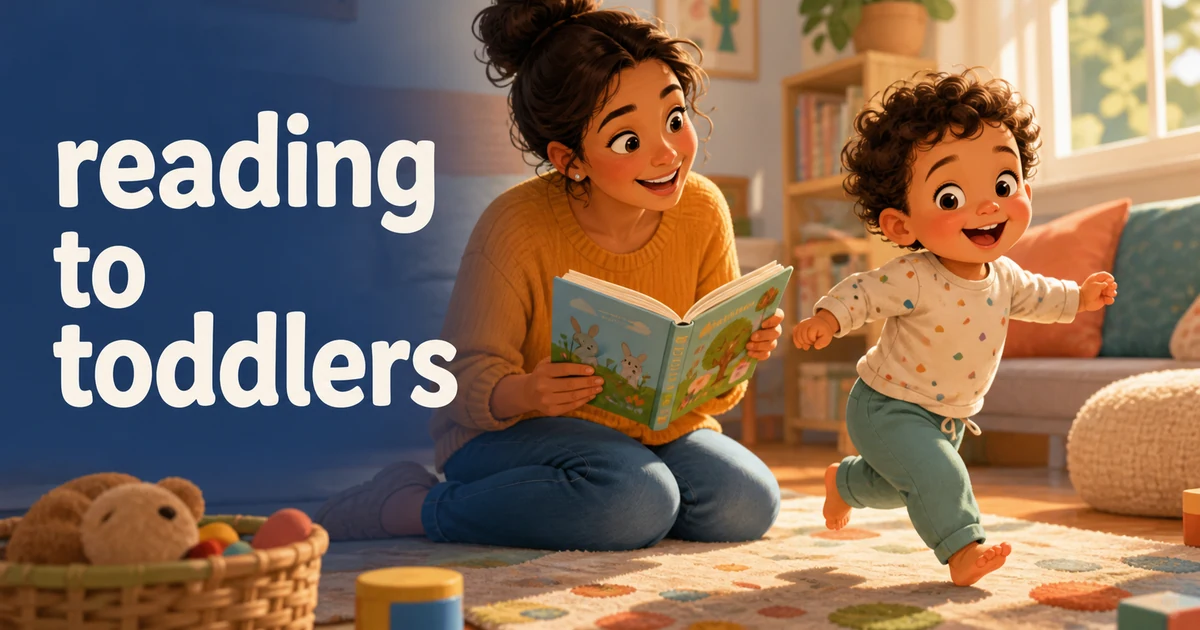
Constant movement during books can make story time feel harder than it needs to be. The short version is this: choose one clear goal, use movement-friendly shared reading, and judge success by connection and understanding—not by whether a child sits perfectly still or gives the expected answer.
Why a story can help
A shared story also gives adults information. The detail a child notices, avoids, repeats, or changes can reveal how they understand constant movement during books. That observation should guide the next conversation more than a generic moral should.
Narrative gives a child psychological distance. It is often easier to consider what a fox, astronaut, or ordinary classmate might do than to discuss one's own difficult moment directly. That distance protects dignity while still making early reading confidence available for reflection.
Fiction allows rehearsal without immediate real-world cost. A character can misunderstand, pause, ask for support, or try again while the child studies the sequence from a safe distance. This makes early reading confidence discussable before it is urgently needed.
Reading together also regulates pace. Unlike a fast real-world conflict, a page can be revisited and a decision can be examined. That slower timescale gives children ages 1–3 room to understand constant movement during books.
A story can normalise struggle without normalising harm. The child sees that difficult feelings and imperfect attempts are part of learning, while the plot still protects boundaries and consequences. That balance is central to credible teaching about early reading confidence.
Memory favours connected events over isolated advice. A distinctive setting, character goal, obstacle, and outcome create retrieval cues that can later bring movement-friendly shared reading to mind during ordinary life.
Read the need before choosing the book
Notice the adult's prediction before the moment begins. Expecting a battle can change voice, timing, and body language in ways a child detects quickly. Approach the next attempt as data gathering rather than a verdict.
Consider whether success has become too emotionally loaded. Heavy praise, visible disappointment, or repeated discussion can make an attempt feel like a test. Lower the stakes so information and practice can replace performance.
Listen for the child's interpretation. “I hate reading” may mean the text is difficult, the topic feels imposed, the questions feel like tests, or stopping play is painful. Respond to the meaning beneath the sentence, not only the sentence itself.
Map available supports. A familiar object, visual sequence, quieter space, extra processing time, sibling model, or reliable phrase may reduce the load enough for early reading confidence to appear.
Before choosing a story, observe one ordinary episode involving constant movement during books. Note the trigger, the child's body and words, the adult response, and the recovery. A pattern across several days is more informative than the family's hardest single moment.
Check the emotional temperature. If either adult or child is already overwhelmed, teaching is unlikely to land. Regulate first, reconnect second, and bring in the story later when curiosity has returned.
What to look for
Do not mistake keyword presence for relevance. A page may repeat “reading to toddlers” while offering little narrative value. Read a sample for voice, specificity, emotional honesty, and a complete ending.
Assess the invitation to participate. Refrains, visual patterns, predictions, and meaningful choices can support engagement; noisy prompts and constant interaction can interrupt the narrative's emotional line.
Use cultural and family fit as a quality criterion. Children should encounter both mirrors of familiar life and windows into other lives, but unfamiliar practices deserve context rather than being treated as decoration.
Preview how the story treats adult authority. Safe boundaries can be firm, but adults should not win through ridicule or unexplained power. Guidance should leave room for questions and age-appropriate agency.
Look for illustrations or sensory details that add information. A character's posture, distance from others, unfinished task, or changed environment can open conversation without requiring the adult to explain every feeling.
Look for complexity appropriate to the reader. A story may show that two feelings coexist, a kind choice still disappoints someone, or help is brave. Nuance makes early reading confidence credible rather than sentimental.
How to read it without turning it into a lesson
Avoid turning every page into a question. Comment, wonder aloud, and sometimes keep reading. Conversation supports comprehension; interrogation competes with immersion.
End with connection rather than a quiz. A simple “I liked reading that with you” protects the relationship as the reason to return. Reflection can happen later in play or daily life.
Use the illustration before supplying an emotion label. Ask what the face, hands, distance, or colour suggest. Evidence-based noticing supports inference and makes room for interpretations beyond the adult's first idea.
Invite the child to choose where to pause. Their selected moment may reveal humour, confusion, fear, or identification that an adult-led discussion would overlook.
Allow rereading to change the adult too. Notice a detail you missed, revise an interpretation aloud, or accept the child's stronger evidence. This models flexible thinking around early reading confidence.
Use one planned pause near the character's decision. Ask, “What have you noticed?” or “What might happen next?” A genuine question has more than one defensible answer and does not require the child to guess the adult's preferred moral.
Move from story to practice
Use a three-box sequence labelled before, hard moment, and next step. Draw or write one detail in each box. This externalises the chain and reduces the working-memory demand when constant movement during books happens quickly.
Turn movement-friendly shared reading into a visual path with two or three landmarks. The child can point to the current step instead of holding the whole sequence in working memory.
Retell the plot with one detail changed. Ask how the character's options would change if a friend arrived, time ran short, or the first strategy failed. This turns early reading confidence into flexible reasoning rather than one memorised answer.
Plan a supported real-world trial and an exit. Tell the child what they can try, what help looks like, and how to pause. Knowing there is a safe way out can make movement-friendly shared reading easier to attempt.
Build a tiny bridge into the next day. Place a visual cue where the challenge occurs, plan one supported attempt, and tell the child when help will be available. The environment should carry part of the memory load.
Ask the child to rank three possible responses for safety, kindness, and usefulness. There may not be one winner. Explaining the trade-off turns early reading confidence into judgment that can travel across contexts.
What progress actually looks like
Use the child's spontaneous references as evidence. Mentioning a character, repeating a line in play, or proposing a different ending suggests that the narrative has become available for thinking.
Look for transfer rather than exact imitation. The child may not repeat the character's words but may pause, seek proximity, or propose a compromise. Different behaviour can express the same developing early reading confidence.
Measure participation in the practice itself. Willingness to role-play, suggest a line, or revisit the turning point can precede change during the higher-pressure real event.
Compare like with like. A tired school night should not be measured against a relaxed weekend morning. Note context so normal fluctuations are not mistaken for failure.
Record one sentence after a relevant moment: context, support, and response. A short log can reveal whether the plan works only at certain times and prevents memory from over-weighting dramatic setbacks.
Ask whether the story has improved family language. Shared neutral phrases can reduce long explanations and help caregivers respond consistently when constant movement during books.
Important limits
Do not introduce the book during a meltdown, use it as a consequence, or ask why the child cannot behave like the protagonist. Regulate and reconnect first. Return later when the story can be experienced as support.
Do not promise that one story will produce a result. Narrative can clarify, normalise, and rehearse, but children also need realistic expectations, supportive routines, repeated experience, and adult co-regulation.
Be careful with reward-heavy extensions. Stickers and points can make a reading interaction feel transactional. Start with choice, connection, visible progress, and a task sized for success.
Separate general guidance from individual advice. Culture, language, disability, neurotype, trauma history, and family context can change what support is appropriate.
Avoid presenting one cultural routine or family structure as the norm. Use language that leaves room for different caregivers, homes, traditions, communication styles, and ways of participating.
Avoid using a real peer or sibling as the obvious villain in a personalized plot. Composite or fictional characters protect relationships and keep the story focused on options rather than blame.
Try a matched TalePillow story
Explore the TalePillow story library for a ready-made narrative connected with early reading confidence. If the challenge is highly specific, create a personalized story using a familiar interest, one believable obstacle, and movement-friendly shared reading. Always preview the result before sharing it with a child.
Two questions families often ask
Should I explain the moral at the end? Usually not. Ask what the character noticed, wanted, or tried. A child's own interpretation is more informative than repeating an adult conclusion.
How long should story time last? End while connection remains. Five engaged minutes can be more valuable than twenty resistant ones. Length can grow with interest and capacity.
Sources and further reading
- American Academy of Pediatrics: shared reading guidance
- Harvard Center on the Developing Child: executive function
The goal is not to use a story to make a child comply. It is to make early reading confidence easier to understand, discuss, and practise while protecting connection. For constant movement during books, begin with movement-friendly shared reading and adjust from what the child shows you.
Turn Your Child into the Hero of Their Own Storybook
Upload a single photo to create a bespoke 16-page 3D illustrated adventure with character likeness, bedtime audio narration, and instant print-ready PDF in 2 minutes.