
Topic
Stories Teaching Children Independence and Self-Reliance
The fact that a child can do a small thing on his own is more important than the fact that it is beautiful. But most of the morning conflict comes from the fact that the faster adult should take over. The stories in this group break down tasks into visible steps for children, and give characters permission to do it wrong once before doing it right — something children should be allowed to do at home.
Stories in the group

Mateo and the Golden Squash
A tiny taste, a big discovery
Exploring new foods without pressure4–7 years old 8 minute
Jun's Hello at the Gate
Goodbyes can make room for hellos
Handling school separation3–6 years old 5 minute
Elliot and the Waiting Moon
Making room for someone else's turn
Waiting and taking turns4–7 years old 5 minute
Theo's Tiny Morning Map
One clear step at a time
Building morning independence4–7 years old 5 minute
Leo and the Last Blue Crayon
A little repair after a hard moment
Repairing sibling conflict4–7 years old 5 minute
Mara and the Two-Breath Backpack
A tiny pause for big feelings
Pausing with big feelings4–7 years old 5 minute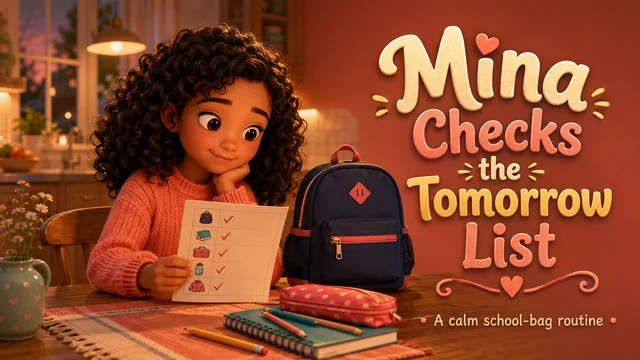
Mina Checks the Tomorrow List
A calm school-bag routine
packing a school bag with a checklist4–8 years old 7 minute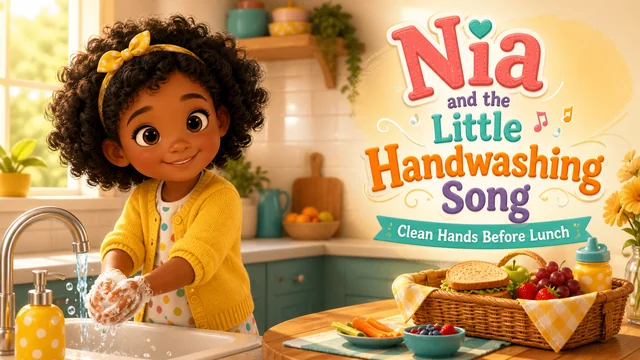
Nia and the Little Handwashing Song
Clean Hands Before Lunch
washing hands before meals3–6 years old 7 minute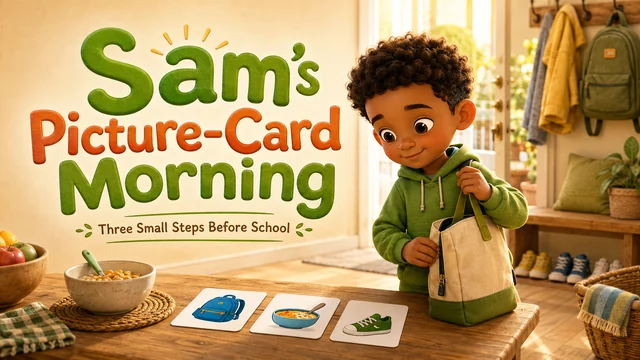
Sam’s Picture-Card Morning
Three Small Steps Before School
using a short morning routine3–7 years old 7 minute
Bea’s Table-Time Rhythm
A gentle dinner manners story
using relaxed mealtime manners3–7 years old 7 minute
Theo Takes a Curious Look
Trying Food Gently
exploring a new food without pressure3–8 years old 7 minute
Ella Builds a Snack Plate
A gentle food choices story
choosing a balanced snack4–8 years old 7 minute

Showing 12 of 124 stories
Short answers for parents
Frequently asked questions
At what age can children prepare their own school clothes?
From 4 years old, children can do it if it is divided into three fixed steps and has a clear place to put things. Adults still do the final check, but check after the child does it, not do it for the child.
What if the child works very slowly and is late every morning?
Don't practice independence on school mornings. Practice on the weekend or in the afternoon when no one is under pressure, then switch to the morning when your child has mastered it.
Should children be rewarded when they can do it themselves?
Specific comments are more effective than gifts: “you put all three things together yourself” tells your child exactly what he did well, while gifts only teach him to wait for the gift.