
Topic
Stories for 5 year olds
At age five, your child starts to care what you think and feel, and will have to take care of more things on his own when he enters first grade. The stories here revolve around things with friends — sharing chores, keeping promises, dealing with being left out — and around children taking charge of their own affairs.
Stories in the group

Mateo and the Golden Squash
A tiny taste, a big discovery
Exploring new foods without pressure4–7 years old 8 minute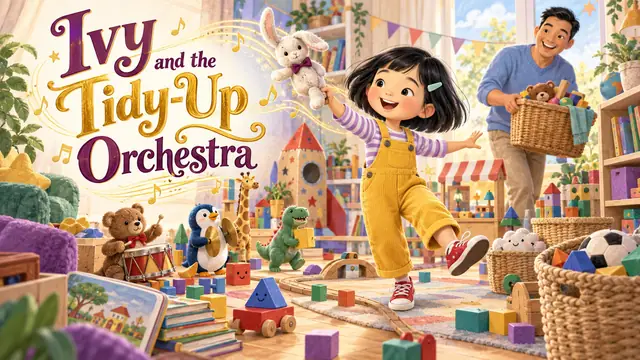
Ivy and the Tidy-Up Orchestra
One small return at a time
Tackling tidy-up in small steps4–7 years old 8 minute
Jun's Hello at the Gate
Goodbyes can make room for hellos
Handling school separation3–6 years old 5 minute
Sofia's Yes, No, Maybe Kite
My boundaries matter. So do yours.
Respecting yes, no, and maybe5–8 years old 5 minute
Amara and the Open Spot
A question, a kind offer, a little patience
Joining play with confidence5–8 years old 5 minute
Elliot and the Waiting Moon
Making room for someone else's turn
Waiting and taking turns4–7 years old 5 minute
Noor and the Safe Grown-Up Circle
Stop, step back, check
Knowing when to stop and check5–8 years old 5 minute
Theo's Tiny Morning Map
One clear step at a time
Building morning independence4–7 years old 5 minute
Asha and the Screen-to-Sleep Lantern
A gentle goodbye to the day
Moving from screens to sleep4–7 years old 5 minute
Leo and the Last Blue Crayon
A little repair after a hard moment
Repairing sibling conflict4–7 years old 5 minute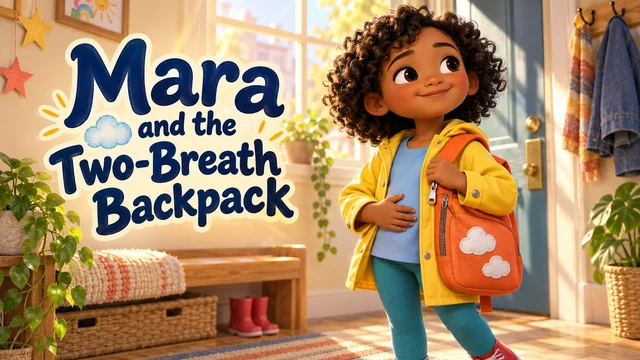
Mara and the Two-Breath Backpack
A tiny pause for big feelings
Pausing with big feelings4–7 years old 5 minute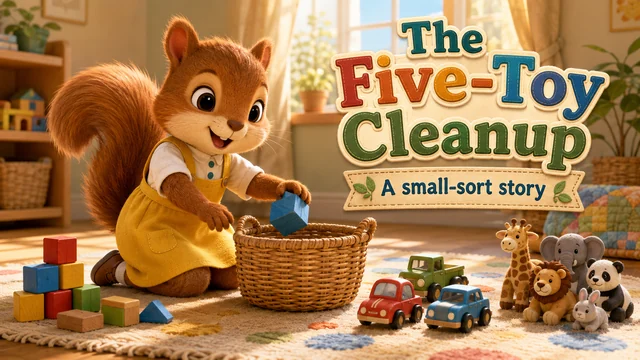
The Five-Toy Cleanup
A small-sort story
cleaning up toys by category3–7 years old 7 minute

Showing 12 of 165 stories
Short answers for parents
Frequently asked questions
Can stories help children prepare for first grade?
Help the child worry the most about the social and self-care parts: making new friends, asking for help when they don't understand, taking care of their own things. Letters and numbers require different practice.
A 5 year old child often compares himself to his friends, what should he say?
Change the comparison back to your child over time: what he couldn't do last month and now he can do it. Compared to you, there is always someone who is better.
What if your child refuses to share with you?
Don't take the child right away. Teach your child a way to say how to keep his turn and give you your turn, because he needs tools, not more reminders to be good.